AI-STEM Academy (9-12)
Build Your Future With AI Skills That Matter
High school students develop professional-level AI skills through advanced projects, machine learning exploration, and portfolio-building work. Create applications that solve real problems while preparing for college applications, scholarships, and tech careers.
-
Creative-First
AI Learning
-
Ages 12-16
Grades 9-12
Where Advanced Skills Meet Real-World Impact
AI STEM Academy bridges the gap between classroom learning and professional application. High school students explore machine learning fundamentals, build portfolio-worthy projects, and develop the technical and ethical reasoning skills that colleges and employers value.
This isn’t abstract theory—it’s hands-on work with professional tools, real problem-solving, and projects students can showcase on college applications, in scholarship essays, and in job interviews.
- College application portfolio focus
- Machine learning introduction
- Professional-level tools
- Career pathway exploration
- Scholarship-worthy projects
Quick Facts
- Grades: 9-12
- Duration: Semester or full year
- Class size: 12-25 students
- Format: In-school, elective, virtual
- Focus: Portfolio, ML, career prep
- Tools: Python, Teachable Machine, AI platforms
- Outcomes: College-ready portfolio
Why AI STEM Academy Prepares Students for Success
- For Students
- For Educators
- Parents & Counselors
Build Skills That Actually Matter for Your Future
You’re not learning AI because it’s trendy—you’re learning it because these are the skills that will open doors. AI STEM Academy helps you build a portfolio of real work: projects you can discuss in college interviews, include in scholarship applications, and reference in your first job or internship.
What You'll Gain:
- Portfolio of 4-6 advanced projects you're proud to show anyone
- Introduction to machine learning (sounds impressive because it is)
- Experience with professional AI tools and workflows
- Projects that solve real problems (not just homework)
- Skills for AP CS, college STEM courses, or tech internships
- Confidence talking about your work with adults and interviewers
Perfect If You:
- Want to stand out on college applications
- Are considering STEM majors or tech careers
- Like building things that actually work
- Want practical skills, not just theory
- Need portfolio pieces for scholarships
- Are curious about how AI really works

"I used my AI project in every college essay. It gave me something real to talk about, and admissions counselors were genuinely interested. I got into my top choice and got a scholarship."
Advanced Curriculum That Prepares Students for What's Next
AI STEM Academy provides the rigor and depth high school students need to be genuinely prepared for college CS courses, competitive internships, and tech careers. Projects are sophisticated enough to challenge advanced learners while scaffolded enough for students new to AI and coding.
What Teachers Appreciate:
- Genuine depth—this isn't "intro to AI" for the fifth time
- Portfolio-building focus gives students tangible outcomes
- Works as CS elective, STEM capstone, or advanced track
- Complete curriculum with professional-level project guides
- Can substitute for or complement AP CS courses
- Students gain skills they'll actually use in college
Perfect For:
- Computer science electives
- STEM capstone courses
- Advanced technology tracks
- AP CS enrichment or alternative
- Independent study programs
- Career and technical education (CTE)
College Applications + Career Prep in One Program
AI STEM Academy gives high school students exactly what they need to stand out: a portfolio of sophisticated work they can discuss confidently in college interviews, reference in scholarship essays, and leverage for internships and first jobs.
For College Applications:
- Portfolio projects = concrete accomplishments to discuss
- Students can articulate complex technical concepts clearly
- Demonstrates initiative, creativity, and technical ability
- Perfect material for personal statements and essays
- Shows preparation for competitive STEM programs
For Career Exploration:
- Exposure to AI/ML careers, UX design, data science
- Experience with professional tools and workflows
- Understanding of tech industry expectations
- Skills for summer internships and part-time tech work
Why AI Skills Matter for College & Career Success
Stand Out on Applications
College admissions is competitive. Students who can discuss sophisticated projects they’ve built, problems they’ve solved, and skills they’ve developed have a significant advantage. AI STEM Academy provides the portfolio material that makes essays and interviews compelling.
Prepare for Tech Careers
The fastest-growing, highest-paying careers involve AI, data science, and machine learning. Students who understand these technologies now—not just as users but as creators—are positioned for internships, scholarships, and career opportunities.
Bridge to College Success
Students entering STEM majors often struggle with the jump from high school to college rigor. AI STEM Academy provides that bridge: real coding, complex problem-solving, and professional-level work that prepares students for college coursework.
72%
of top tech jobs require AI/ML skills
(Bureau of Labor Statistics)
3x
40%
AI/ML job growth over next 5 years (fastest-growing field)
“High school is your opportunity to build a portfolio BEFORE college applications—when it matters most.”
Skills & Projects That Open Doors
Students learn how machine learning actually works through hands-on projects that classify images, recognize patterns, and make predictions.
Core Concepts:
- How AI "learns" from data and examples
- Training models with Teachable Machine and similar tools
- Understanding accuracy, bias, and model improvement
- Real applications: image recognition, classification, prediction
- Introduction to Python for AI (basics, no prior coding required)
Projects Include:
- Image classification model (e.g., identifying plant species)
- Pattern recognition application (e.g., gesture control)
- Predictive model (e.g., trend analysis)
- Custom trained model for personal project
Skills Developed:
- Computational thinking and algorithmic reasoning
- Data preparation and model training
- Testing and iteration
- Technical documentation
- Presentation of technical concepts to non-technical audiences
Real-World Applications:
- Foundation for college AI/ML courses
- Understanding for data science pathways
- Critical for competitive STEM internships
- Transferable to engineering, medicine, business analytics
Students create polished, functional applications that solve real problems—work they're genuinely proud to showcase.
Project Types:
- AI-Powered Apps: Web or mobile applications using AI APIs
- Community Solutions: Projects addressing local needs
- Creative Tech: Generative art, music, or storytelling tools
- Research Applications: Data analysis and visualization tools
- Social Impact Projects: Tech for good initiatives
Portfolio Development:
- Professional project documentation
- GitHub repositories with clear READMEs
- Video demonstrations and walkthroughs
- Written explanations for non-technical audiences
- Presentation decks for interviews
What Makes Projects Portfolio-Worthy:
- Solve real problems (not just demos)
- Show technical depth and complexity
- Include user testing and iteration
- Demonstrate ethical considerations
- Are visually polished and complete
College Application Integration:
- Common App activities section entries
- Personal statement and supplemental essay material
- Interview talking points
- Scholarship application examples
- Letters of recommendation material for teachers
Students explore AI career pathways while developing professional skills employers and colleges value.
Career Pathways Explored:
- AI/Machine Learning Engineer
- Data Scientist
- UX Designer (AI products)
- AI Ethics and Policy
- Product Manager (tech)
- Research Scientist
- Cybersecurity Analyst
Professional Skills:
- Technical communication and documentation
- Collaborative problem-solving
- Project management and planning
- Version control and code sharing (GitHub)
- Presenting to non-technical audiences
- Giving and receiving technical feedback
Industry Exposure:
- Guest speakers from tech companies
- Career panel discussions
- Industry workflow practices
- Professional tool experience
- Understanding of tech job market
College & Career Readiness:
- Skills for competitive internships
- Preparation for technical interviews
- Understanding of STEM major requirements
- Network with industry professionals (optional)
- Portfolio for scholarship applications
- Machine Learning Basics
- Machine learning introduction
- Portfolio Development
- Professional Tools
- Technical Communication
- Career Exploration
- College Prep
Real Student Projects, Real Results
These are actual portfolio projects created by high school students in AI STEM Academy. Each represents weeks of work, technical depth, and the kind of accomplishment that strengthens college applications.
- Winner - County Science Fair
Alex M., Class of 2024
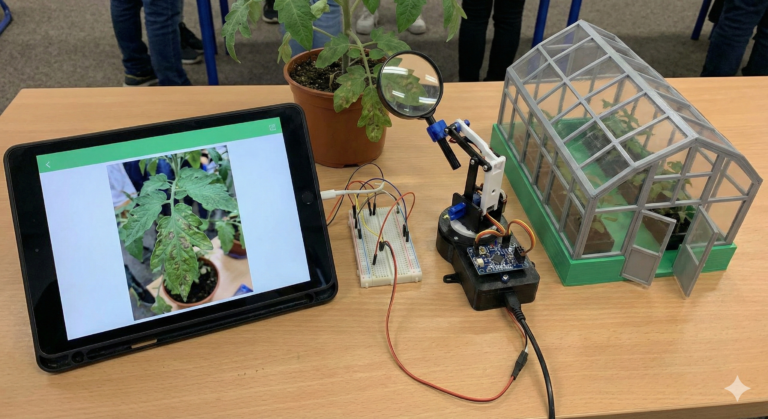
AgriAI: Plant Disease Identifier
Trained ML model to identify 12 common plant diseases from photos. Partnered with local farm to test accuracy. 94% identification rate after optimization.
- Teachable Machine
- Python
- React
- Accepted to Cornell Engineering with scholarship
- School Innovation Award
Jordan L., Class of 2023
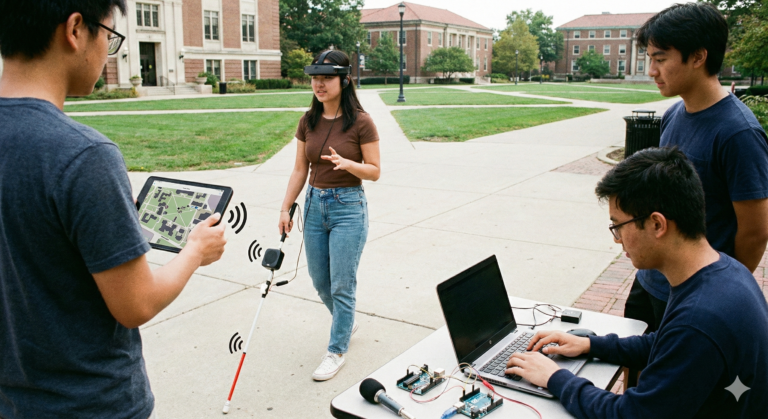
VoiceNavigate: Campus Accessibility Tool
Voice-controlled navigation app for visually impaired students at her high school. Uses speech recognition and text-to-speech to guide users to classrooms.
- Web Speech API
- Google Maps API
- JavaScript
- Full ride to MIT, mentioned in admission essay
- Environmental Innovation Award
Marcus T., Class of 2024
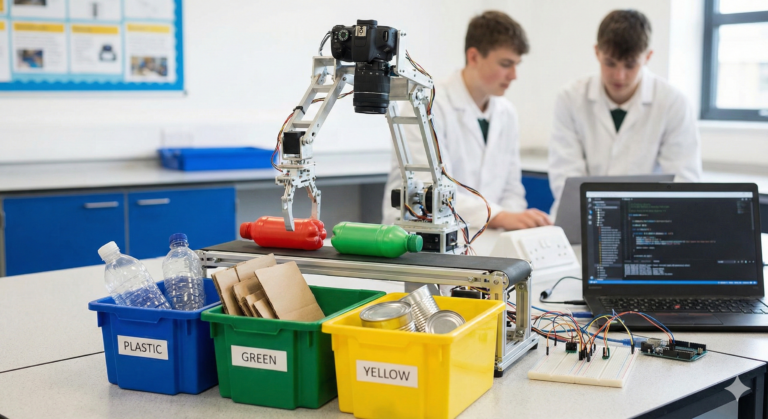
RecycleRight: Smart Sorting Assistant
Image recognition system that identifies recyclable materials and provides sorting instructions. Reduced contamination in school recycling by 40%.
- TensorFlow.js
- Teachable Machine
- Node.js
- Georgia Tech CS program, referred in scholarship essay
95%
of students report portfolio strengthened college applications
$2.1M+
in scholarships earned by program alumni
78%
pursue STEM majors in college
4.8/5
average student rating of program value
Data from program alumni surveys 2022-2024
Projects That Impress Colleges and Employers
Every project in AI STEM Academy is designed to be portfolio-worthy: technically sophisticated, clearly documented, and solving real problems.
Grades 9-12 4-6 weeks
Students train a machine learning model to classify images for a real-world application, learning fundamentals of supervised learning and model optimization.
What Students Build:
- Identify a classification problem to solve (e.g., identifying plant diseases, sorting recyclables, recognizing hand gestures)
- Collect and prepare training data (100+ images per category)
- Train model using Teachable Machine or similar platform
- Test accuracy and identify improvements
- Integrate model into a web application
- Document process and present results
Technical Skills:
- Data collection and preparation
- Model training and evaluation
- Accuracy testing and iteration
- API integration basics
- Web application deployment (optional)
Portfolio Components:
- GitHub repository with code and documentation
- Video demo of working application
- Written case study explaining problem, approach, results
- Presentation deck for interviews
Example Student Projects:
- Plant disease identifier for local farm
- Recyclable sorting guide for school
- Hand gesture controller for accessibility
- Bird species identifier for nature center
College Application Value:
Demonstrates initiative, technical depth, problem-solving, and real-world application—exactly what STEM programs want to see.
Grades 9-12 6-8 weeks
Students identify a real community problem and build an AI-powered application to address it, combining technical skills with social impact.
What Students Do:
- Interview community members to identify needs
- Design AI solution to address specific problem
- Build functional prototype or MVP
- User test with community members
- Iterate based on feedback
- Present findings and impact to stakeholders
Example Project Types:
- Local resource finder (food banks, shelters, services)
- Small business support tool (inventory, scheduling, customer service)
- Educational support (tutoring matcher, study resources)
- Environmental monitoring (air quality, water testing data)
- Accessibility tool (text-to-speech, translation, navigation)
Technical Components:
- AI API integration (ChatGPT, image recognition, etc.)
- User interface design
- Database basics (storing information)
- Testing and iteration
- Deployment and sharing
Social Impact Components:
- Community needs assessment
- User-centered design
- Accessibility considerations
- Ethical implications discussion
- Impact measurement
Student Example:
“I built ‘NeighborHelp’—an app connecting elderly residents with student volunteers for grocery delivery. Used AI to match requests with available volunteers. Helped 50+ residents during my senior year and wrote about it in every college essay.”
Grades 9-12 8-10 weeks (advanced)
Advanced students conduct original research exploring how machine learning models work, testing hypotheses about AI performance, bias, or applications.
What Students Do:
- Formulate research question about machine learning
- Design experiments to test hypothesis
- Train multiple models with different parameters
- Collect and analyze performance data
- Draw conclusions and identify implications
- Present findings in research paper format
Example Research Questions:
- How does training data size affect model accuracy?
- Can models trained on one language work for another?
- What factors contribute to bias in facial recognition?
- How do different image qualities affect classification?
- Can AI detect emotions accurately across cultures?
Technical Skills:
- Experimental design and controls
- Data analysis and visualization
- Statistical thinking
- Scientific method application
- Research paper writing
Suitable For:
- Students with strong interest in CS/data science
- Those considering research universities
- AP Research students
- Science fair participants
- Students exploring PhD pathways
College Application Impact:
Research projects signal to admissions committees that students can handle independent inquiry at the college level. Especially valuable for competitive STEM programs.
Flexible Program Structure
Program Specifications
Grade Levels
9th, 10th, 11th, and 12th Grade
(Content appropriate for high school maturity and college-prep focus)
Program Duration
- Semester course: 18-20 weeks (most common)
- Full year: 32-36 weeks with advanced projects
- Intensive quarter: 10-12 weeks (condensed)
- Summer pre-college: 6-8 weeks intensive
- Independent study: Self-paced with milestones
Class Size
- Ideal: 12-20 students (allows depth)
- Maximum: 25 students
- Small cohort: 8-12 students (premium experience)
- Independent study: 1-on-1 or small groups
Technology Requirements
- Laptops or desktops (Chromebooks work for most)
- Internet connectivity
- Web browser + basic Python environment
- GitHub account (free)
- AI platform access (provided)
Course Formats
- CS/STEM elective (most common)
- AP CS enrichment or alternative track
- Senior capstone project
- CTE (Career & Technical Education) course
- Independent study for advanced students
- After-school tech academy
- Summer pre-college program
Typical Schedule
- 3-4 sessions per week (semester course)
- 60-90 minutes per session
- Project-based with workshops and presentations
- Flexible pacing for portfolio development
- Built-in showcase and presentation events
What's Included
Complete Advanced Curriculum
- 25+ project-based units and technical guides
- Machine learning introduction modules
- Portfolio development framework
- College application integration guidance
- Career pathway exploration materials
Technical Resources
- Python basics for AI (no prior coding required)
- GitHub and version control tutorials
- AI platform setup guides
- Professional tool documentation
- Technical writing templates
Teacher Support
- 4-hour professional development (technical + facilitation)
- Office hours for technical questions
- Curriculum implementation coaching
- Guest speaker coordination support
- Email/chat support throughout course
College & Career Resources
- Portfolio documentation templates
- College essay integration guidance
- Scholarship application examples
- Internship preparation materials
- Career pathway information
Student Portfolio Tools
- GitHub setup and best practices
- Project documentation templates
- Video demo guidelines
- Presentation frameworks
- Resume and LinkedIn guidance
Assessment & Evaluation
- Project rubrics (technical + portfolio quality)
- Self-assessment and reflection prompts
- Peer review frameworks
- Portfolio evaluation guides
- College-readiness benchmarks
“Perfect for CS teachers, STEM coordinators, or educators looking to provide genuine college and career preparation through hands-on AI work.”
Program Investment
AI STEM Academy programs are designed for high schools offering advanced CS/STEM pathways. Pricing reflects the depth, college preparation focus, and professional outcomes.
Single Course Implementation
$3,500 – $5,500
Includes:
- Complete curriculum for one course
- Teacher PD and technical training
- Materials for up to 25 students
- Semester or full-year implementation
- Portfolio development resources
- College application integration guidance
Multiple Sections or Tracks
$6,000 – $12,000
Includes:
- Curriculum for 2-4 course sections
- PD for multiple teachers
- Shared technical resources
- Department coordination support
- Advanced student track materials
- Priority technical support
School or District Program
$12,000 – $25,000+
Includes:
- Curriculum for full CS/STEM pathway (9-12)
- Comprehensive teacher training and ongoing PD
- Implementation coaching and planning
- Career partnership coordination
- Industry speaker arrangements
- Multi-year curriculum planning
Special Options:
$4,000-7,000
Summer pre-college program
$2,500-4,000
Independent study/small cohort
$3,000-6,000
After-school tech academy
Custom pricing
CTE pathway integration
Grant Funding Support Available
AI STEM Academy qualifies for Perkins CTE funding, STEM grants, college readiness initiatives, and workforce development grants. We provide complete documentation and can coordinate with industry partners for sponsorship.
Payment Options:
- School purchase orders accepted
- Flexible payment plans available
- Grant funding support and documentation
- Tax-deductible as educational expense
Questions about implementing as CTE course or AP alternative? Schedule a call to discuss.
Comprehensive Support for Teachers & Students
You’re not just getting curriculum—you’re getting a partnership that ensures both teachers and students succeed at a high level.
- Teacher Professional Development
4-Hour Technical Training:
- Machine learning fundamentals for teachers
- Python basics and AI platforms walkthrough
- GitHub and version control for educators
- Portfolio development best practices
- College application integration strategies
- Technical troubleshooting and common issues
Ongoing Support:
- Monthly technical office hours
- Access to teacher community (Slack/forum)
- Video tutorials for advanced topics
- Guest speaker coordination assistance
- Technical Q&A via email/chat
- Mid-semester check-in calls
Optional Enhancements:
- On-site training day (hands-on coding)
- Co-teaching for first complex projects
- Advanced AI topics workshop
- Industry partnership facilitation
- Curriculum & Technical Resources
Project-Based Curriculum:
- 25+ units with detailed technical guides
- Step-by-step tutorials for all skill levels
- Video walkthroughs of complex concepts
- Scaffolded learning from basics to advanced
- Real-world application examples
- Extension challenges for advanced students
Technical Documentation:
- Python environment setup guides
- AI platform account creation instructions
- GitHub repository templates
- API integration tutorials
- Debugging guides and troubleshooting
- Security and ethical use guidelines
Portfolio Development Tools:
- Project documentation templates
- GitHub README best practice examples
- Video demo creation guides
- Technical writing frameworks
- Presentation slide templates
- Student & School Support
For Students:
- Technical help desk (email/chat)
- GitHub troubleshooting assistance
- Portfolio review feedback (optional)
- Career pathway guidance resources
- College application tips and examples
- Peer community access (optional)
For Teachers:
- Fast response to technical questions (24-48 hours)
- Help adapting projects for diverse learners
- Support for advanced student requests
- Guidance on industry partnerships
- College counselor coordination tips
Industry Connections (Optional):
- Guest speaker network (tech professionals)
- Mentorship program connections
- Internship pathway information
- Company partnership opportunities
- Career panel coordination
Teaching Advanced AI? You're Not Alone.
“The most common concern: ‘I’m not a machine learning expert—can I really teach this?’
Here’s the reality: You don’t need to be an ML engineer. You need to:
- Be willing to learn technical concepts alongside students (we teach you)
- Facilitate project-based learning (you probably already do this)
- Connect technical work to real-world applications (we provide examples)
- Guide portfolio development (we provide all templates and frameworks)
Our 4-hour PD teaches you everything you need. And when students ask questions beyond your knowledge—which they will—you’ll know exactly how to guide them to find answers. That’s what professionals do, and it’s what we teach. Plus, we’re always one email away when you need technical backup.”
— Teacher Support Philosophy, AI STEM Academy
What Students Achieve
By Course Completion, Students Will:
Build College-Ready Portfolio
- 4-6 sophisticated, documented projects
- GitHub repositories with professional READMEs
- Video demos and technical documentation
- Portfolio website showcasing work
- Material for college essays and interviews
Master ML Fundamentals
- Understand how machine learning works
- Train and evaluate models
- Work with real AI tools and platforms
- Basic Python programming for AI
- Ethical considerations in AI development
Develop Professional Skills
- Technical communication and documentation
- Collaboration using industry tools (GitHub, etc.)
- Project management and planning
- Presenting technical work to various audiences
- Professional portfolio presentation
Prepare for Career & College
- Understanding of AI/tech career pathways
- Skills for competitive STEM internships
- Readiness for college CS courses
- Network with industry professionals
- Scholarship application materials
Portfolio Outcomes
4-6
projects in professional portfolio
100%
of students complete GitHub repository
College-ready
portfolio quality suitable for applications
Technical depth
appropriate for STEM programs
What You Can Document
For Students:
- Complete portfolio of work
- Certificate of completion
- Skills assessment results
- College application materials
- Career pathway exploration documentation
For Schools:
- Course completion rates
- Portfolio project metrics
- College acceptance data (if tracked)
- Student skill development benchmarks
- Industry partnership outcomes
For Parents:
- Individual student portfolio
- Project demonstrations and presentations
- College application guidance used
- Skills developed and career pathways explored
“Students complete AI STEM Academy with tangible proof of their abilities—a portfolio that opens doors to colleges, scholarships, and career opportunities.”
Frequently Asked Questions
Answers to common questions from high school educators, students, parents, and college counselors about AI STEM Academy.
How is AI STEM Academy different from AP Computer Science?
AP Computer Science:
- Focus: Programming fundamentals and algorithmic thinking
- Language: Java (AP CS A) or general concepts (AP CS Principles)
- Outcome: AP exam score for college credit
- Projects: Typically smaller, focused on demonstrating specific concepts
AI STEM Academy:
- Focus: Building real-world AI applications and portfolio development
- Languages: Python basics + web technologies + AI platforms
- Outcome: Professional portfolio of 4-6 substantial projects
- Projects: Large, multi-week applications solving real problems
Best Together: Many schools offer AI STEM Academy as an advanced elective AFTER AP CS. Students apply their programming foundation to build sophisticated projects that strengthen college applications beyond just course credit.
Bottom line: AP CS teaches you to code. AI STEM Academy teaches you to build things that matter.
Do students need prior programming experience?
Not required, but some coding exposure is helpful:
Ideal Background: Completed intro CS course or AP CS Principles, basic understanding of variables, loops, conditionals, comfort with computers and learning new tools.
We Can Work With: Students who've taken any coding class (even Scratch or JavaScript), self-taught students who've experimented with Python or web development, strong problem-solvers willing to learn coding as needed.
What We Teach: Python basics for AI, working with APIs and libraries, GitHub and version control basics, web development foundations (if needed).
We've had students with minimal coding background build impressive portfolios by focusing on problem-solving and learning code as a tool for their projects.
What technology and equipment do students need?
Student Devices: Laptops or desktops (Chromebooks work for most projects). Minimum specs: 4GB RAM, modern browser, internet connection. 1:1 devices ideal but partner work possible.
Software Requirements (All Free):
- Web browser (Chrome, Firefox, Safari)
- GitHub account (free)
- Python environment (we provide setup guides - can use online IDEs)
- AI platform accounts (most are free for education)
What's NOT Required: Expensive hardware or GPUs, purchased software licenses, school servers or special infrastructure.
Most AI work happens in the cloud, so students don't need powerful computers. We'll assess your specific tech setup during planning.
How much time outside of class do students need for projects?
In-Class Time: 3-4 hours per week (typical for semester course). Most core instruction happens in class.
Outside Class (Typical): 2-4 hours per week for major projects. More during project finalization weeks, less during instructional units.
Similar time commitment to AP classes (3-5 hours/week outside class) or other project-based courses.
For Overcommitted Students: We provide guidance on scoping projects appropriately. A well-executed, focused project is more valuable than an overly ambitious incomplete one.
Can this course count for CTE (Career & Technical Education) credit?
Yes, in most states. AI STEM Academy aligns with CTE pathways for Information Technology, STEM/Engineering, Computer Science, and Software Development.
What We Provide: Complete CTE documentation and alignment, industry skill standards mapping, career pathway information, work-based learning components.
Perkins Funding: Many schools use federal Perkins CTE funds to support implementation. We provide all documentation needed.
Contact us about CTE implementation in your state—we've successfully worked with schools in 15+ states for CTE approval.
How do you assess student work in a project-based course?
Project Rubrics Include:
- Technical Implementation (40%): Does the code/application work? Is it well-structured?
- Problem-Solving & Creativity (20%): Is the solution innovative?
- Documentation & Communication (20%): Is the project well-documented?
- Process & Iteration (20%): Did the student test and improve?
We assess the entire project lifecycle: research, planning, user testing, reflection—not just final code. Assessment emphasizes skills colleges and employers value.
What if students want to do more advanced work than the curriculum covers?
We encourage and support advanced students:
- Built-In Extensions: Every project includes "stretch goals" and advanced challenges
- Independent Study: Students can propose custom projects or research
- Competition Opportunities: Advanced projects often qualify for science fairs, coding competitions, and research symposiums
- AP Research Integration: Projects can serve as foundation for AP Research topics
Some students produce work suitable for publication in student research journals or contributing to open-source projects.
How do parents and students access portfolios for college applications?
GitHub Repositories: Each project lives in its own GitHub repository. Public repos can be viewed by anyone (colleges, employers). Links added directly to college applications.
Portfolio Websites: Students create portfolio sites (we provide templates). Professional presentation of all projects with easy-to-share links.
Application Integration:
- Common App Activities Section: Projects listed with links
- Personal Statements: Concrete examples for essays
- Interviews: Students can demonstrate functionality
Colleges can see actual work, not just descriptions—significantly more compelling than typical application materials.
What support do you provide for college counselors?
Extensive resources to help counselors support students:
- Counselor briefing materials and program overview
- Language for letters of recommendation
- Application integration guides (activities, essays, interviews)
- Technical glossary explaining terms in layman's language
- Optional 30-45 minute virtual briefing sessions
Counselors can email us with questions about how to describe specific projects or connect projects to college programs.
Can students use AI STEM Academy projects for scholarship applications?
Absolutely—many students have. Projects excel in STEM/tech scholarships, community impact scholarships, merit scholarships, and portfolio-required scholarships.
What Makes Projects Strong: Concrete accomplishments ("I built an app that helped 200+ people"), measurable impact, technical depth, personal story.
Success Examples: Student won $20K scholarship focusing essay on community food waste project. Multiple students awarded Google and Microsoft scholarships. Research project led to Regeneron STS semifinalist recognition.
Many students report their AI STEM Academy projects were central to multiple successful scholarship applications—ROI is substantial.
What's the difference between AI STEM Academy and Saturday AI STEM Academy?
AI STEM Academy (This Program): In-school course, semester or full year, regular class periods, portfolio development for college applications, all high school students (9-12).
Saturday AI STEM Academy: Out-of-school program (Saturdays), ongoing year-round, real client projects with potential income, ages 15-21 (includes college students), professional-level work.
Can Students Do Both? Yes! Common pathway: Take AI STEM Academy during school year, join Saturday Academy for more advanced work.
See Saturday Academy page for details: /programs/saturday-academy
How does AI STEM Academy prepare students for specific college majors?
Projects and skills translate directly to many STEM majors:
- Computer Science: Portfolio of working applications, GitHub repositories, Python foundation
- Engineering: Problem-solving, iterative design, technical documentation
- Data Science: ML basics, data visualization, statistical thinking
- Information Systems: Application development, user-centered design
- HCI/UX Design: User testing, iterative design, accessibility
- AI Ethics/Cognitive Science: Understanding AI limitations, bias, social implications
Key Transferable Skills: Problem-solving, technical communication, self-directed learning, persistence, project management.
Didn’t find your answer? We’re here to help.
Where AI STEM Academy Fits in the Learning Journey
AI STEM Academy is the capstone of our K-12 AI literacy pathway—where students apply skills to build professional-level portfolios for college and careers.
Earlier Programs (K-8)
Foundation
AI-STEM Start (K-5)
Creative exploration and digital literacy
Prompt engineering, digital ethics, critical thinking
Students don’t need prior AI programs to succeed in Academy—we meet high schoolers where they are!
AI STEM Academy (9-12)
High School Capstone
Advanced AI skills, machine learning exploration, and professional portfolio development for college applications and career preparation.
What Students Build:
- 4-6 portfolio-worthy projects
- GitHub repositories with professional documentation
- Real applications solving real problems
- Skills for college CS courses and tech internships
After Academy
Next Steps
AI STEM Studios (16-21)
Real client projects, professional work, potential income
Career Pathways
Competitive CS/Engineering programs, strong foundation for coursework
Career Opportunities
High school tech internships, part-time development work
Building Complete K-12 AI Literacy
Many high schools partner with middle schools to create K-12 AI literacy pipelines. Students who progress through multiple levels arrive at Academy with strong foundations and produce even more sophisticated work.
Ready to Bring AI STEM Academy to Your High School?
Choose the option that fits your decision process. We’re here to support you whether you’re exploring, planning, or ready to launch.
Download Sample Portfolio Projects
Get detailed guides for 3 advanced student projects that demonstrate the caliber of work students will create. Perfect for sharing with administrators, department chairs, or curriculum committees.
What You’ll Get:
- Complete project documentation
- Technical specs and learning outcomes
- College application integration examples
- Implementation timeline and requirements
- Program overview and pricing information
Examples: Machine learning image classification, Community impact application, Research-level data analysis project
Schedule Implementation Consultation
Book a 30-45 minute call to discuss your school’s specific needs, student population, integration with existing CS pathway, and how Academy fits your college prep goals.
What We’ll Cover:
- Your current CS/STEM offerings
- Student demographics and skill levels
- Teacher background and support needs
- CTE or college prep focus
- Timeline and budget
Who Should Join: CS/STEM department chair, CTE coordinator, Technology director, Assistant principal for curriculum
Attend Virtual Demo & Q&A
Join a live session where we demonstrate student projects, walk through curriculum materials, show portfolio examples, and answer implementation questions from high school educators.
Demo Includes:
- Live demonstrations of student work
- Curriculum walkthrough
- Technical requirements review
- College application integration
- Q&A with program director
60 minutes (45min presentation + 15min Q&A), Monthly offerings
Prepare Your Students for College & Career Success
Join high schools nationwide providing students with the advanced AI skills, professional portfolio, and career preparation that make a real difference in college applications and first career opportunities.
Building tomorrow’s tech leaders today
20+ years empowering youth
Portfolio-focused outcomes